Snæfellsnes Peninsula: A Loki Travel Guide to Iceland’s Wild West
The Snæfellsnes peninsula is sometimes called Iceland in miniature, and the nickname earns its keep. In the span of a single morning you can move […]

Tucked at the head of a long fjord in western Greenland, Kangerlussuaq is a small settlement with an outsized reputation. Its name means “the long […]
Tucked at the head of a long fjord in western Greenland, Kangerlussuaq is a small settlement with an outsized reputation. Its name means “the long fjord,” a nod to the roughly 180 kilometer waterway that reaches all the way out to the coast. The town sits about 50 kilometers north of the Arctic Circle, on a flat stretch of land beside a river, with highlands rising to the north and south. It is the only town in Greenland that is not on the open ocean, and it is also the only place in the whole country where you can reach the great ice sheet by road.
For many travelers, Kangerlussuaq is the first taste of Greenland, since for years it was the main airport hub for the entire country. But it is far more than a place to change planes. Within a short drive you can stand at the edge of the ice cap, watch a glacier calve, spot musk oxen and reindeer roaming the tundra, or look up at the Northern Lights filling the sky. The town is small, home to only a few hundred people, yet it offers experiences that draw visitors from all over the world.
This guide gives you a full picture of Kangerlussuaq, covering its history, main sights, outdoor adventures, places to stay and eat, and the best time to visit.
Long before the town existed, the area around Kangerlussuaq was a summer hunting ground. The Saqqaq people used the fjord around 4,000 years ago, and the later Dorset and Thule cultures came here to hunt too. The land was prized for its warm, stable summers and its rich wildlife. The winters here are very cold, though, so no traces of permanent year-round settlements from those early peoples have been found. Today this wider region forms part of a UNESCO World Heritage area, recognized as an ancient Inuit hunting ground between the ice and the sea.
The town as we know it began in 1941, during World War II, when the United States built an air base here and named it Bluie West-8. After the war it was reopened and renamed Sondrestrom Air Base, and it became an important stop for flights between North America and Europe. During the Cold War, the base helped service early warning radar stations out on the ice sheet. At its busiest, more than a thousand American personnel were stationed here.
The last U.S. forces left in 1992, and the base passed into Greenlandic hands, becoming a settlement with the Greenlandic name Kangerlussuaq. Almost every permanent building in town dates from the American years, and that history is easy to see. The buildings line up in neat rows along straight roads, and locals still talk about the “airport side” and the “base side” of town. There is even a small legacy in the electricity supply, which runs at the American standard rather than the one used in the rest of Greenland.
For decades Kangerlussuaq served as Greenland’s most important airport, since it had the only runway long enough for big long-range planes. That changed in 2024, when a rebuilt and expanded airport opened in the capital, Nuuk, and took over as the main hub. The town now handles domestic flights and a seasonal route to Copenhagen, mostly to serve the tourism that has become its lifeblood. Kangerlussuaq still has one of the best-equipped airports in Greenland thanks to its stable weather and long runway, and its future is closely tied to the travelers who come to see the ice.
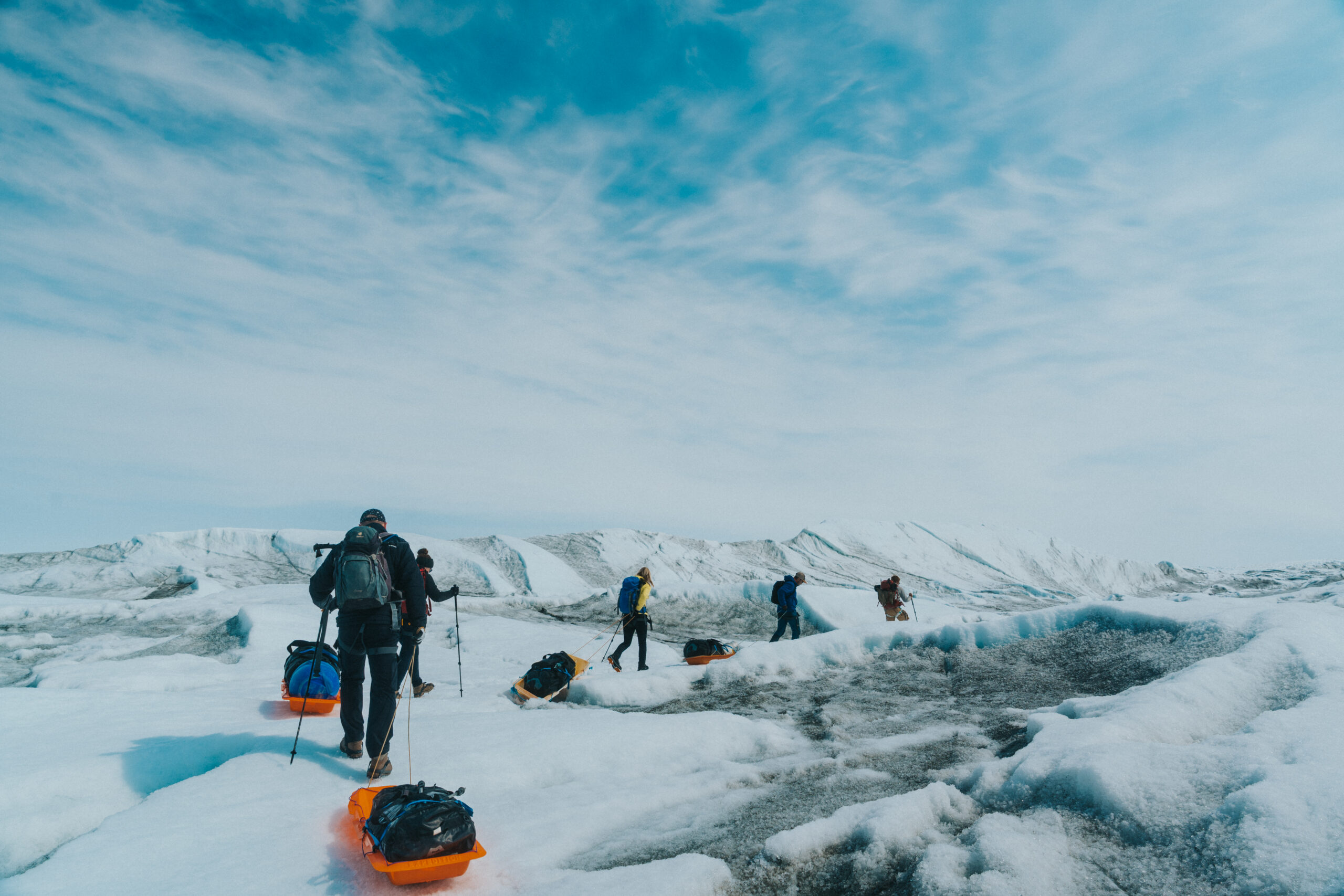
The ice sheet is the main reason most people come to Kangerlussuaq, and for good reason. This is the easiest place in all of Greenland to reach the ice, with a road leading right up to its edge. The most popular spot is known as Point 660, where you can actually walk out onto the ice itself. Standing there, with nothing but ice stretching out in three directions and thousands of meters of it beneath your feet at the center, is a humbling experience. The most adventurous travelers can even camp out on the ice for a night in the frozen wilderness.
A short trip from town brings you to Russell Glacier, an arm of the ice sheet that rises in a dramatic wall of ice around 60 meters tall. The drive there crosses rough, beautiful terrain, and once you arrive you can stand close to the towering ice and watch it shimmer in shades of white, blue, and green. If you are lucky, you may hear the loud crack of ice breaking away and crashing into the river below. It is a sight and sound you will not forget.
Set in former air base buildings, the local museum tells the story of the town’s days as an American base and the history of aviation in Greenland. Many rooms still look much as they did decades ago, and there are artifacts from the World War II era as well as objects from Greenland and Denmark’s shared past. It is well worth an hour or two, especially since it helps make sense of the unusual buildings and layout you will see all around town.
The land around Kangerlussuaq holds some of the richest wildlife in all of western Greenland. Musk oxen are the stars of the show. These shaggy, powerful animals were brought here from the northeast of the country in the 1960s, when just 27 of them were moved to the area. The project was a huge success, and the population has grown into one of the largest in the world. Reindeer are also common, along with Arctic foxes, hares, and birds of prey such as gyrfalcons. If you spot a musk ox, keep a safe distance, since despite their calm look they are fast and strong.
Kangerlussuaq is built for the outdoors, with adventures on offer in every season. Some, like dog sledding and Northern Lights tours, depend on winter snow and dark skies. Others can be enjoyed all year round.
Thanks to its old base roads, Kangerlussuaq has more trails and tracks than most places in Greenland, making it a wonderful spot for summer hiking. A popular all-day trip leads to Garnet Rock, where you can hunt for red garnets with a hammer and chisel, often with musk oxen grazing nearby. Other favorites include the climb up Sugarloaf Mountain for sweeping views over the ice and the area, walks to a nearby waterfall, and the Fossil Plain. The town is also the starting point of the famous Arctic Circle Trail, a backcountry route of more than 160 kilometers that runs all the way to Sisimiut.
Kangerlussuaq sits far enough north to keep sled dogs, and it is one of the best places in the country to ride one. You can take a short trip of a couple of hours across the frozen fjord, or join longer expeditions that head into the mountains and stay overnight in hunting cabins. There are even multi-day journeys all the way to Sisimiut for those wanting a real Arctic adventure.
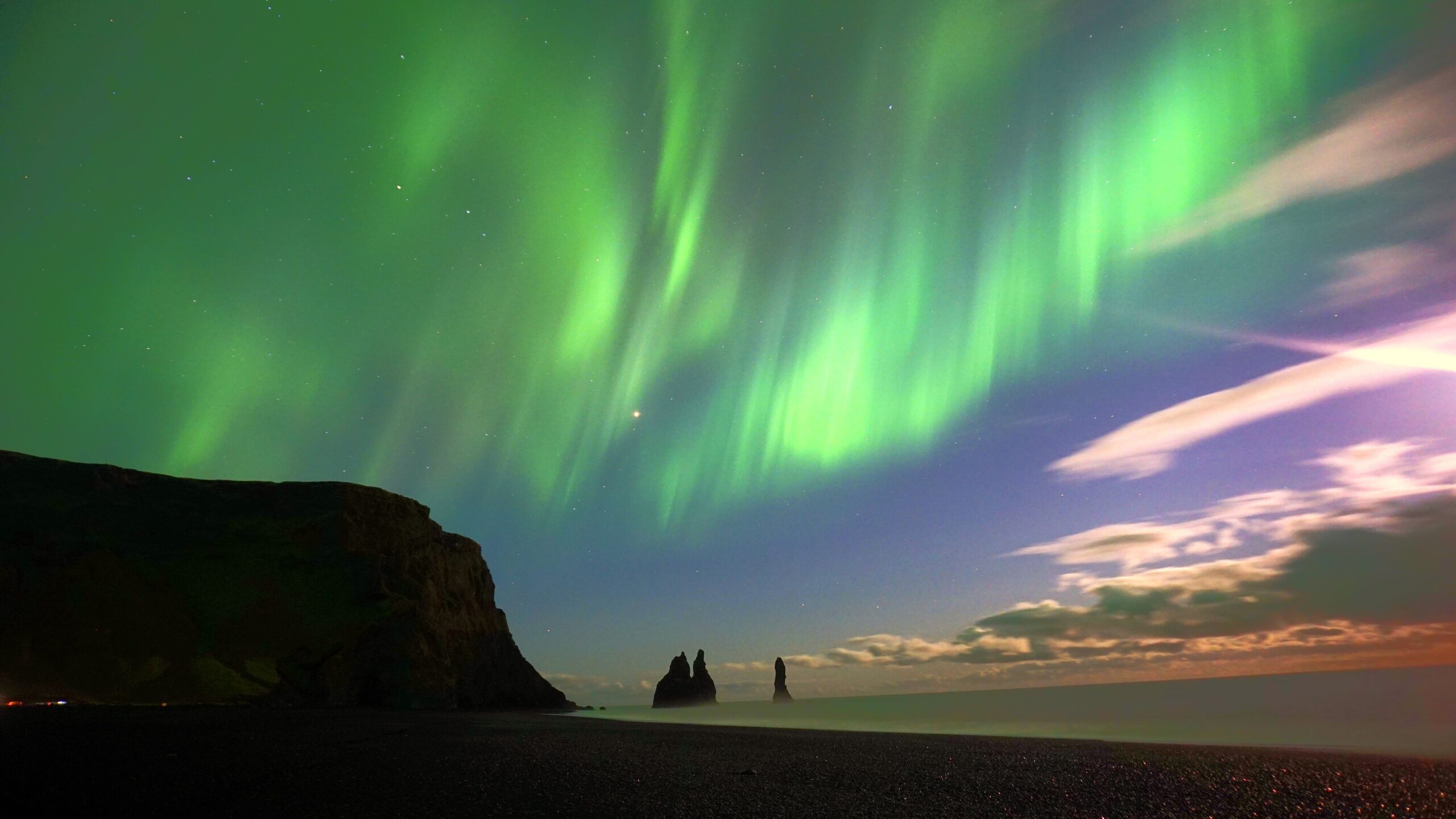
With more than 300 clear nights a year and very little light pollution, Kangerlussuaq is one of the finest places in the Arctic to see the Northern Lights. In autumn and winter the lights are often strong, and you can sometimes watch them right from the center of town. For an even better view, head out on a guided tour to a dark spot away from any lights, where the colors really come alive against the stars.
For a different view, you can take a small sightseeing flight over the area. These trips fly up through a sandy valley toward the Russell and Leverett glaciers, then out across the ice sheet, with good chances of spotting musk oxen along the way. Every seat is a window seat, so you get a clear look at the vast icy landscape below.
In summer the lakes and rivers around Kangerlussuaq are perfect for paddling, and the kayak itself has a history here going back thousands of years. You can fish for Arctic char in the rivers, paddle on Lake Ferguson, or try ice fishing in winter, when guides drive you out onto the thick ice of the fjord to drill a hole and try your luck.
Kangerlussuaq has a handful of places to rest, several of them in former base buildings. Here are a few options to consider.
Set right inside the airport building, this is the most central place to stay in town. You can collect your bags and walk straight to reception. It is the largest option by far, with many rooms and suites, plus restaurants and a cafeteria on site.
A cozy choice located less than 100 meters from the airport, close to the shops and places to eat, with Mount Hassel rising behind it. It has comfortable rooms, a dining and living area, a kitchen where you can cook your own food, and a small souvenir shop.
A traditional and friendly hostel about two kilometers from the airport, set in former military barracks. It has a TV room, shared facilities, and a souvenir shop, and you can book excursions here too. Breakfast is served each morning.
Because the town is small and rooms are limited, it is wise to book your stay well in advance, especially during busy seasons.
You eat well in Kangerlussuaq, with fresh local produce such as musk ox, reindeer, and seafood close at hand. The best-known spot is Restaurant Roklubben, set beside Lake Ferguson about five kilometers outside town. It serves seasonal local dishes in a relaxed setting, and on certain days it puts on a generous Greenlandic buffet with more than 30 dishes. A free bus runs there and back from town.
Closer to the airport, Hotel Kangerlussuaq has a restaurant and a well-loved cafeteria, the latter open all day and famous for its musk ox burgers. There is also a pizzeria behind the airport and a fast-food spot on the base side of town. Opening hours change with the season, so it is worth checking once you arrive.
Kangerlussuaq is a year-round destination, and a few experiences, such as visiting the ice sheet, watching musk oxen, and taking scenic flights, are possible at almost any time. What you can do beyond that depends on the season.
Summer, from roughly May through September, is the time for hiking, kayaking, and fishing, with long days and mild weather that bring the green tundra and its wildlife to life. This is the season for setting out on foot with a packed lunch and exploring the trails.
Winter, from around January through April, is the season for snow. Dog sledding, ice fishing, and Northern Lights hunting all come into their own once the landscape freezes over and the nights grow long and dark.
Getting to Kangerlussuaq is part of the journey. You can fly in from Copenhagen on a seasonal route, or fly to Nuuk and connect with a short domestic flight that takes under an hour. However you arrive, you land in a place where the Arctic feels close enough to touch, with the ice sheet just a short drive away.